Wait... Am I Bribing My Kid? (And What to Do Instead)
Let’s be honest—we’ve all done it.
You’re running late, your kid won’t put their shoes on, and before you even think about it, you blurt out: “If you hurry up, I’ll give you a treat in the car.”
Sound familiar?
You’re not alone. Bribery happens all the time—especially when you’re just trying to get through the day without a meltdown (yours or theirs). But here’s something most people don’t realize:
There’s a big difference between bribing and reinforcing behavior. And that difference really matters when it comes to long-term habits, independence, and behavior that actually sticks.
What’s reinforcement?
Reinforcement is when you set the plan up ahead of time—before the behavior happens.
“Once you brush your teeth and put your pajamas on, we’ll read your favorite story.”
You’re laying out the expectations clearly and calmly. Then, when your child follows through, you follow up with something they care about—a reinforcer.
You describe the behavior you want to see.
Your child does it.
Then you follow through with something rewarding.
This teaches your child what to do and why it matters. It helps them build real habits. And it creates structure they can actually understand and trust.
What’s a bribe?
Bribes usually happen after your child is already doing something you don’t like.
“If you stop whining, I’ll give you a cookie.”
“If you calm down, I’ll let you have the tablet.”
In those moments, you’re just trying to stop the chaos—and that’s totally understandable. But here’s what your child learns:
“If I whine, complain, or resist… I might get something out of it.”
It unintentionally reinforces the exact behavior you’re trying to avoid.
Bribes are reactive. They’re usually made in a moment of stress. And they create a pattern where your child learns to negotiate after misbehaving, instead of learning what’s expected beforehand.
The key difference
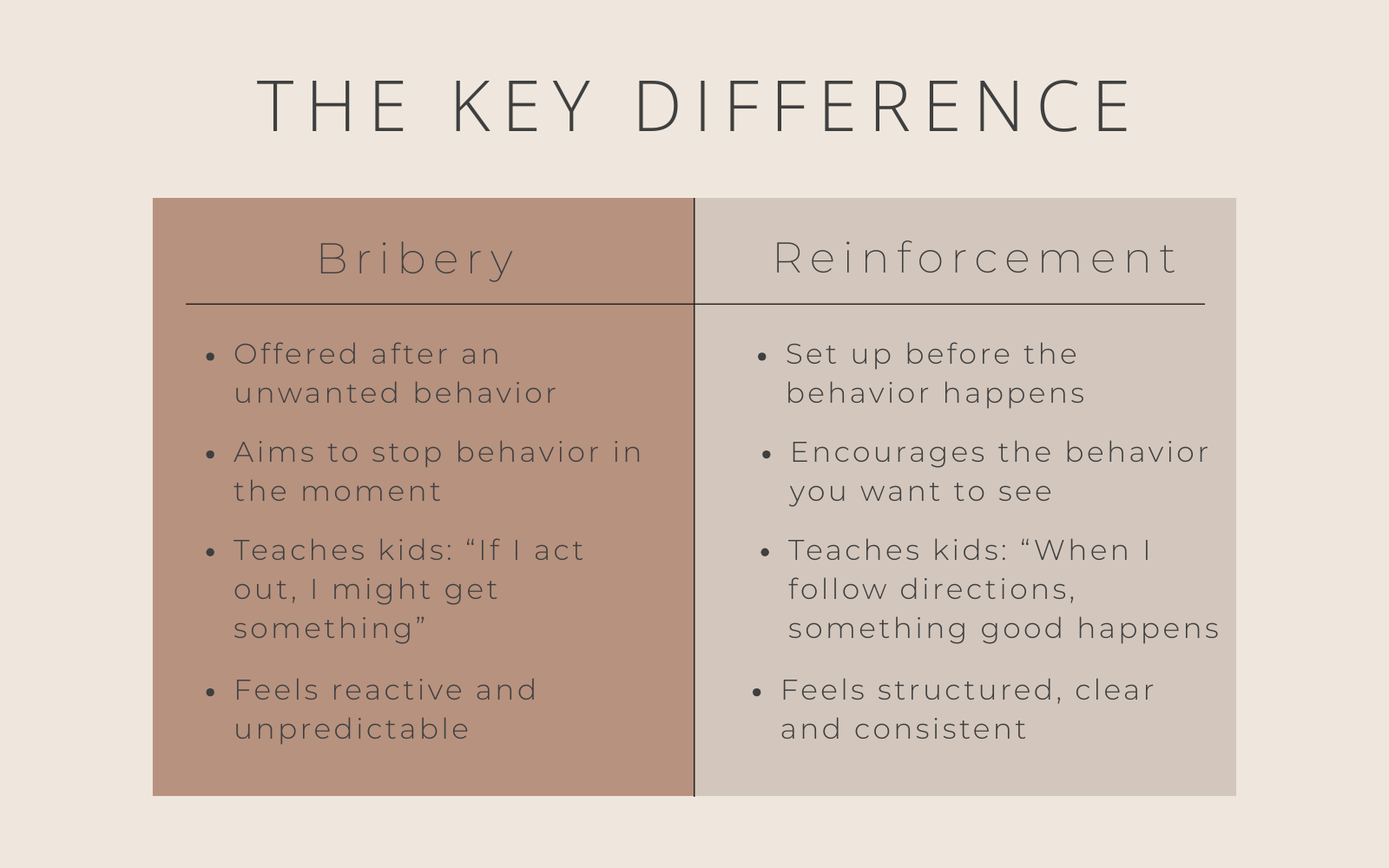
Bribes are offered after an unwanted behavior and reward that behavior in the moment.
Reinforcement is set up before the behavior and used to reward the behavior you want to see.
Think of it like your job
You don’t get a surprise bonus after showing up late or complaining.
You get paid because it was part of the deal. You knew the expectations. You followed through. And then you got paid.
Same goes for kids. When they know what’s expected—and they know something positive follows their effort—they’re much more likely to cooperate. It’s how we build real motivation.
So how do you stop bribing and start reinforcing?
You don’t have to be perfect. And this isn’t about beating yourself up when you slip into bribing mode (because you will—it happens).
It’s about making small, intentional shifts toward setting the stage ahead of time instead of reacting in the moment.
Be clear about what you want your child to do.
Let them know ahead of time what will happen after they follow through.
Stick with it, even if it takes a few tries.
This one shift changes everything.
Want help actually doing this?
That’s exactly what I walk you through in my free mini-course: Setting Your Child Up for Success.
It’s a short, on-demand course that breaks down:
What reinforcement really is (and how to use it)
How to stop relying on bribes
How to teach your child to listen the first time—without threats, yelling, or sticker charts
The videos total just over 30 minutes, and you can watch them whenever it works for you.
If you’ve ever felt stuck between threatening consequences or pulling out bribes just to make it through the day… this is for you.
Final Thoughts
If you’ve ever felt like you're constantly negotiating with your child just to get through the day… you’re not doing anything wrong. But you can change the pattern—and it doesn’t have to be hard.
Reinforcement is a tool, not a trick. And once you know how to use it, everything starts to shift.